



Real vs. Fake Red Jasper: How to Spot Dyed Stones is a crucial topic for gem lovers, jewelry makers, and mindful collectors. Many newcomers accidentally purchase dyed quartz, cheap howlite, or factory glass instead of genuine earth minerals. Learning these practical physical tests will help you protect your crystal collection with total confidence.
In our Buddha Bodhis workshop, we handle thousands of raw minerals and hand-carved beads every year. We believe that spiritual work and daily fashion thrive best when built on natural authenticity. When you understand how authentic minerals form, spotting chemical treatments becomes second nature.
Key Highlights for Quick Identification:
- 💎 Complete Opacity: Genuine red jasper blocks 100% of light, unlike translucent agates or glowing colored glass.
- 🌿 Natural Earthy Palette: Authentic specimens display rich brick, rust, and terracotta tones rather than candy-like neon crimsons.
- 🔮 Tough Hardness: Ranking at 6.5 to 7 on the Mohs scale, true jasper resists scratches from everyday steel keys and blades.
- 💎 Distinctive Veining: Look for organic mineral lines of hematite and dark dendrites that form naturally over millions of years.
- 🌿 Solvent Safety: An acetone swab test removes artificial surface dyes immediately while leaving real jasper completely undamaged.
What Is Real vs. Fake Red Jasper: How to Spot Dyed Stones
Understanding natural minerals starts with basic earth geology. Real red jasper is an ancient variety of chalcedony that formed under deep volcanic pressure. Sellers who cut corners often color cheap white rocks to mimic this beloved gemstone.
Definition and Mineral Profile
Geologically speaking, red jasper belongs to the chalcedony group within the broader quartz family. Its microscopic quartz crystals link tightly together to create an exceptionally tough, durable structure. The official scientific background is cataloged in the Microcrystalline Quartz Classification index.
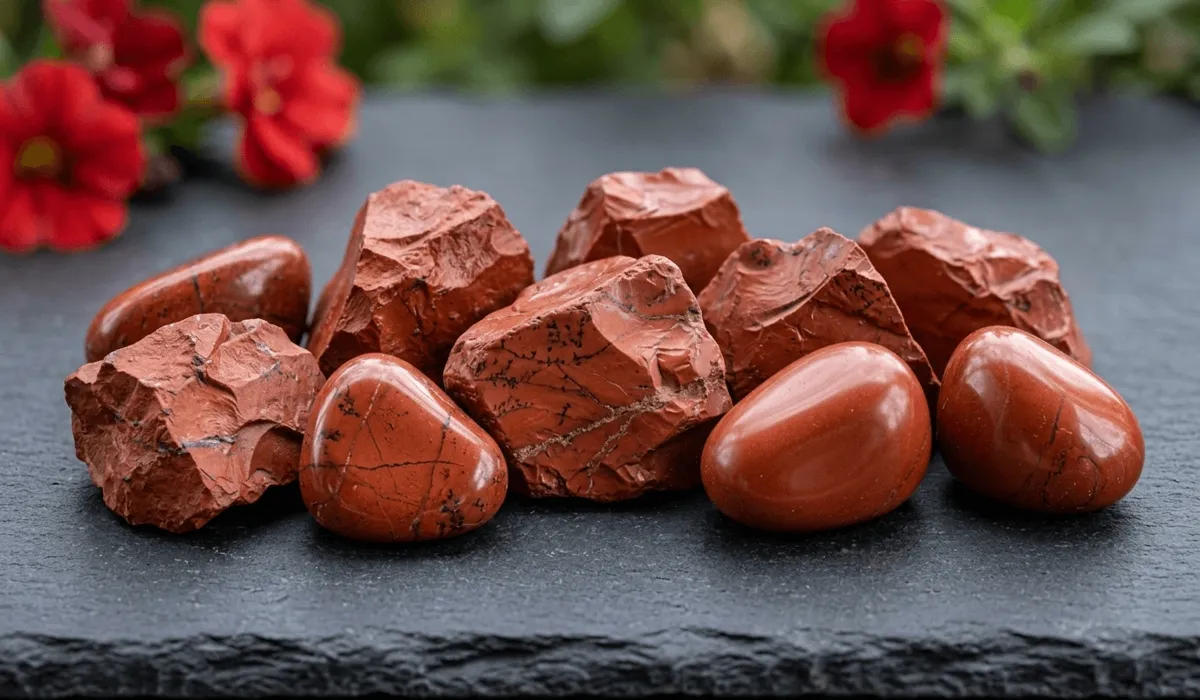
Natural red jasper gets its bold, earthy color from high concentrations of particulate iron oxides like hematite. Because it contains up to twenty percent foreign mineral deposits, it remains completely opaque. Light simply cannot pass through genuine jasper, even along the thinnest cut edges.
This stone ranks solidly between 6.5 and 7 on the Mohs hardness scale. This high mineral density makes it durable enough for daily rings and bracelets. You can scrape an ordinary steel pocketknife across genuine red jasper without leaving a permanent gouge.
Origin and Geological Materials
Natural red jasper forms over vast geological ages when silica-rich water filters through volcanic ash beds and ancient sedimentary layers. As the silica slowly precipitates, microscopic iron particles become trapped inside the microcrystalline matrix. This slow natural growth creates distinctive color bands, dark mineral waves, and subtle earthy shifts.
Secondary minerals such as manganese and goethite often seep into microscopic fissures during cooling cycles. These create dramatic black, tan, or brown veining that no commercial dye factory can realistically replicate. In contrast, synthetic resin casts or pressed stone powders feel uniform, flat, and lifeless.
When we source raw rough for our jewelry lines, we always inspect these raw fractures. Authentic rough displays a smooth, curved break known as a conchoidal fracture. Artificial composites tend to crumble, show crumbly granular edges, or reveal pale inner layers beneath the dyed outer coat.
Basic Characteristics and Authenticity Tips
Authentic red jasper never appears hot pink, electric scarlet, or neon cherry. Instead, its natural palette mirrors warm terracotta flower pots, red desert canyon sands, and aged clay bricks. These earthy tones feel deeply grounded and soothing to the human eye.
The tactile surface of polished jasper has a distinctive waxy or satiny luster rather than a glassy, mirror-like gloss. It absorbs room temperatures slowly and warms gently in your palms as you hold it. Plastic and resin fakes feel warm from the very first touch and lack natural mineral coolness.
Weight is another immediate giveaway when checking your collection at home. Due to its dense silica and iron composition, true jasper has a satisfying, noticeable heft. If a large tumble stone or bead feels lightweight or hollow, you are likely holding colored plastic.
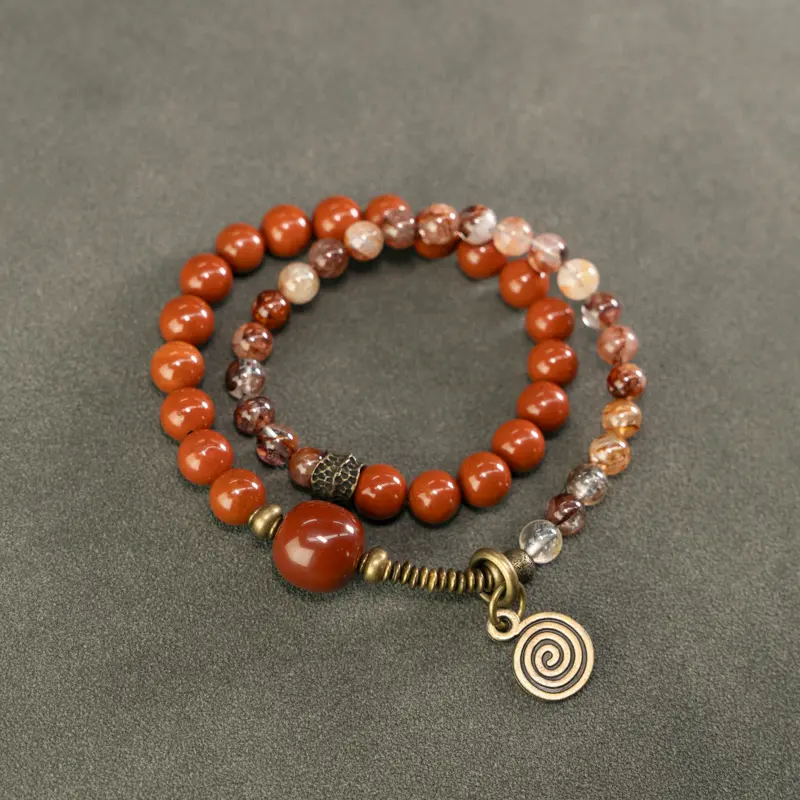
Red Jasper & Red Phantom Quartz Bracelet | Vitality & Grounding
Handcrafted Red Jasper & Red Phantom Quartz bracelet. Boosts vitality, grounds energy & promotes emotional balance. Unique retro-bohemian style for spiritual seekers.
Spiritual Meaning, Traditional Symbolism, and Cultural Roots
Beyond its geological toughness, red jasper holds a deep place in global cultural history. For centuries, ancient civilizations respected this stone as an enduring symbol of physical vitality, personal security, and unshakeable resilience. Its rich red shade has always reminded humans of the lifeblood flowing within their veins.
Traditional Symbolism and Historical Lore
Ancient writers dubbed red jasper the “Supreme Nurturer” because of its comforting, grounding presence during times of hardship. In classical Eastern thought, it embodies the steady Earth element, helping practitioners balance restless Chi(气)during chaotic life changes. Many seekers explore the wider realm of Spiritual Mineral Energies to discover how earth stones bring tranquility.
In ancient Egyptian culture, craftsmen carved red jasper into protective amulets known as the buckle of Isis. They placed these carved symbols on the necks of departed souls to guarantee safe passage through the spirit realm. Greek and Roman soldiers frequently carried jasper amulets into battle, believing the stone bestowed physical stamina and staunch courage.
Native American traditions also revere red jasper as an earthly guardian stone used in sacred rainmaking prayers. They treasured unenhanced earth specimens because natural mineral veining reflects the complex beauty of the natural world. Authentic stones carry the quiet, patient spirit of the wild landscapes where they spent millions of years forming.
Chakra Associations and Energetic Grounding
In modern crystal practices, red jasper connects directly to the Root Chakra (Muladhara) at the base of the spine. The root center governs our fundamental feelings of survival, stability, belonging, and emotional safety. When this area feels depleted, people often feel anxious, untethered, and easily distracted.
Holding genuine red jasper helps draw scattered, floating thoughts downward through the body and back into the earth. It works like an anchor dropped into a stormy sea, preventing the mind from drifting into worry. This steady grounding action prepares you to face daily tasks with calm determination.
Red jasper also lends supportive energy to the Sacral Chakra (Svadhisthana), which oversees passion and creative endurance. Instead of fueling intense, explosive emotional spikes, jasper encourages steady and patient progress. It reminds us that significant creative masterpieces require sustained, daily devotion rather than rushed bursts of energy.
Cultural Context Across Continents
Taoist masters have long incorporated natural earth stones into temple altars to harmonize the balancing forces of yin and yang. They observed that unadulterated jasper contains both fiery red tones and dark, quiet mineral seams within a single solid structure. This union of active red and still earth represents perfect natural balance.
Scandinavian folklore tied red jasper to the brave hero Siegfried, who carried a weapon adorned with red jasper to maintain unwavering resolve. Medieval European herbalists even crushed jasper into protective salves, associating its terracotta color with strong blood and physical endurance. Across every continent, humans recognized that true earth stones carry a uniquely solid presence.
When you wear or hold natural red jasper today, you step into this long human lineage of earth appreciation. Fake, dyed stones lack this deep relationship with ancient traditions because synthetic dyes only mimic the surface color. Authentic minerals connect your spirit directly to the ancient geological heartbeat of our planet.
Everyday Benefits and Mindful Intentions
Working with natural gemstones provides a sensory reminder to live with presence, intention, and healthy personal boundaries. When you choose an authentic mineral, its physical qualities reinforce your mental practices throughout the day. Grounding stones are especially helpful during demanding modern work weeks.
Commonly Associated Intentions
Setting intentions with red jasper centers primarily on building personal stamina, steady patience, and quiet courage. Many of our studio clients choose this stone when starting demanding long-term projects or professional career transitions. It serves as a personal touchstone for remaining composed when deadlines loom close.
The stone is also widely utilized for establishing healthy emotional boundaries with family, peers, and coworkers. Its solid, impenetrable nature encourages you to say no to unreasonable demands without guilt or defensive anger. You learn to stand firm like mountain bedrock while allowing external emotional storms to blow past harmlessly.
Here are several positive personal intentions that align smoothly with the natural spirit of authentic red jasper:
- 🌿 Patience in Progress: Honoring slow, incremental growth instead of seeking instant, unsustainable gratification.
- 💎 Physical Grounding: Reconnecting with your physical senses and body posture during periods of mental fatigue.
- 🔮 Emotional Steadiness: Responding thoughtfully to sudden conflicts rather than reacting with impulsive frustration.
- 🌿 Protective Focus: Guarding your personal time and energy against unnecessary distractions and emotional drains.
Mindfulness and Personal Practices
Incorporating natural red jasper into your daily meditation routine helps quiet a hyperactive imagination. Holding a cool, heavy tumbled stone in your palm gives your hands a tactile focal point. Whenever your thoughts wander toward future anxieties, the smooth weight pulls your awareness directly back to your physical breath.
You can also use red jasper during simple midday breathwork breaks at your office desk. Take three slow, diaphragmatic breaths while feeling the stone’s satiny surface under your thumb. Visualize breathing in the grounding stability of mountain stone while breathing out nervous workplace tension.
Because genuine jasper possesses an unhurried, ancient quality, it reminds us to slow down our speaking and decision-making. In a world obsessed with speed, keeping an authentic mineral nearby serves as a quiet rebellion against unnecessary rushing. It gives you permission to pause, breathe, and act from a center of quiet strength.
How to Wear Red Jasper Bracelets for Balance and Grounding
Wearing gemstone jewelry keeps mineral weight against your skin throughout the day, providing an ongoing tactile anchor. In traditional energy systems, the side of the body on which you wear a bracelet subtly changes its energetic influence. Deciding between wrists depends entirely on what personal intention you wish to cultivate.
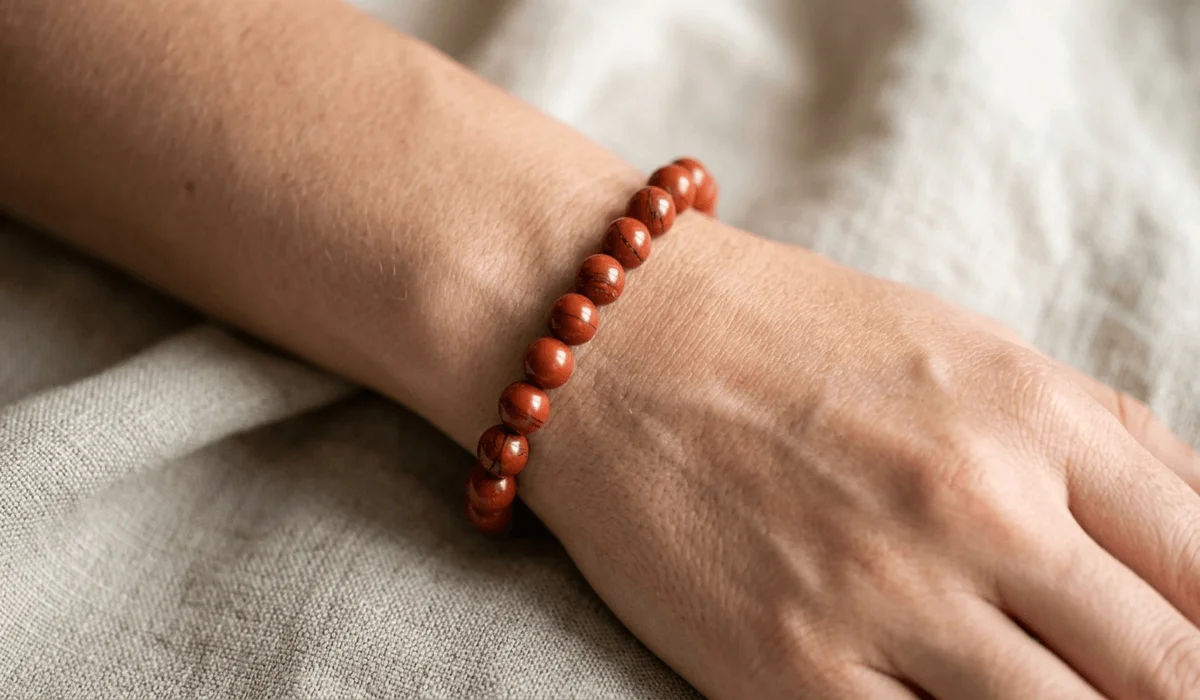
Left Hand vs Right Hand Feng Shui Logic
In traditional Eastern philosophy, the left side of the human body represents the receptive energetic pathway. Wearing a red jasper bracelet on your left wrist invites internal stability, quiet patience, and peaceful grounding into your private emotional space. It is ideal when you feel personally burnt out, emotionally fragile, or mentally exhausted.
Conversely, the right side of the body represents the projective, giving energetic pathway. Wearing your bracelet on your right wrist projects steady confidence, firm personal boundaries, and reliable stamina out into your work and social circles. This placement helps when you must lead difficult meetings, deliver speeches, or stand firm in tough negotiations.
Many practitioners alternate wrists depending on the specific challenges of each new day. Listen to your daily needs; if you need personal comfort, choose the receptive left wrist. If you need to project composed authority and strength, choose the projective right wrist.
Practical Daily Selection and Sourcing
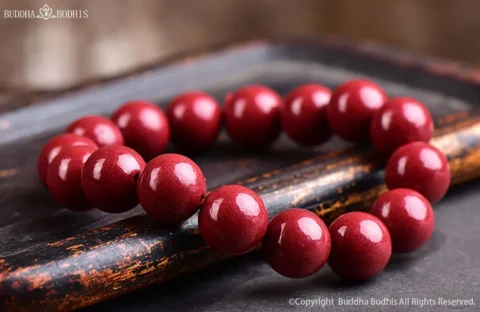
When shopping for a red jasper bracelet, always inspect the individual beads carefully under good, natural daylight. Genuine beads will show slight, charming variations in tone, irregular banding lines, and tiny black mineral flecks. If every bead looks completely uniform, bright red, and spotless, the bracelet is almost certainly dyed howlite or colored glass.
Check the drill holes on every single bead before purchasing. Chemical dye baths always pool heavily inside drill channels, leaving telltale dark crimson rings around the string. Authentic jasper beads will display the same natural terracotta stone color inside the drill channel as on the outer surface.
You can view high-grade, naturally patterned stones within our verified Natural Red Jasper Collection for design inspiration.
High structural integrity and wear resistance are verified through professional Gemological Institute Standards, making natural jasper ideal for heirloom jewelry. Natural microcrystalline stones withstand years of honest daily wear without flaking, fading, or losing their subtle satiny polish.
Intention-Setting Practices
Before wearing your new red jasper bracelet for the first time, take a quiet moment to establish your focus. Cleanse the beads gently to clear any residual handling dust from transit. Then, sit quietly with the bracelet clasped between your closed palms.
Close your eyes, breathe deeply into your belly, and state your chosen daily intention silently or aloud. You might say: “I walk through today with calm courage, steady stamina, and healthy boundaries.” Feel the cool weight of the beads warming against your skin as you anchor this thought into your awareness.
Throughout your workday, touch the beads whenever you notice your shoulders tensing or your thoughts racing. Let the physical texture of the stone remind you of the grounded promise you made to yourself that morning. This simple habit turns an attractive fashion accessory into a mindful life compass.
Real vs Fake Red Jasper: Comprehensive Testing and Identification
Because authentic red jasper is relatively affordable, many buyers assume counterfeiters would never bother faking it. However, commercial mass-producers regularly dye porous, dirt-cheap minerals to create ultra-bright red beads that attract impulse buyers. Learning how to distinguish true jasper from common market imitations will save you time, money, and disappointment.
Natural Red Jasper vs Dyed Howlite
Dyed howlite is by far the most frequent imitation material sold under the red jasper label. Howlite is a naturally white, chalky borate mineral covered in distinctive grey or black spiderweb veining. When dunked into crimson dye tanks, the outer surface absorbs pigment while the interior remains stark white.
Look closely at the dark matrix lines running across the stone using a magnifying glass or jeweler’s loupe. In dyed howlite, the artificial dye gathers heavily along these web lines, making them look dark purple or bleed into the red background. In true jasper, mineral inclusions are part of the stone’s solid fabric rather than liquid dye sitting in surface cracks.
Hardness tests expose dyed howlite immediately. Howlite ranks at a soft 3.5 on the Mohs scale, meaning a copper penny or steel nail will scratch it easily. Red jasper ranks at 6.5 to 7 and will easily dull a steel nail without suffering any scratch mark. Similar dye detection methods are outlined in our Synthetic Malachite Identification guide.
Natural Red Jasper vs Fake Dyed Agate
Another frequent imposter is dyed banded agate or cheap translucent chalcedony. Natural agate is closely related to jasper, but it possesses one critical structural difference: agate is translucent, while jasper is completely opaque. Knowing this single gemological rule will eliminate half of the fakes on the market.
Hold a bright mini LED flashlight directly against the back of your stone in a darkened room. If the stone is genuine red jasper, zero light will penetrate the body; it will remain completely dark and opaque. If the stone glows warmly like a red stained-glass window, you are looking at dyed agate or treated translucent quartz.
Dyed agate also features unnatural color pooling within its curved growth bands. Chemical dyes sink into softer, porous micro-layers, creating unnaturally sharp neon stripes next to faded patches. Genuine red jasper possesses an evenly distributed, earthy brick-red color created by particulate iron locked deep within the stone.
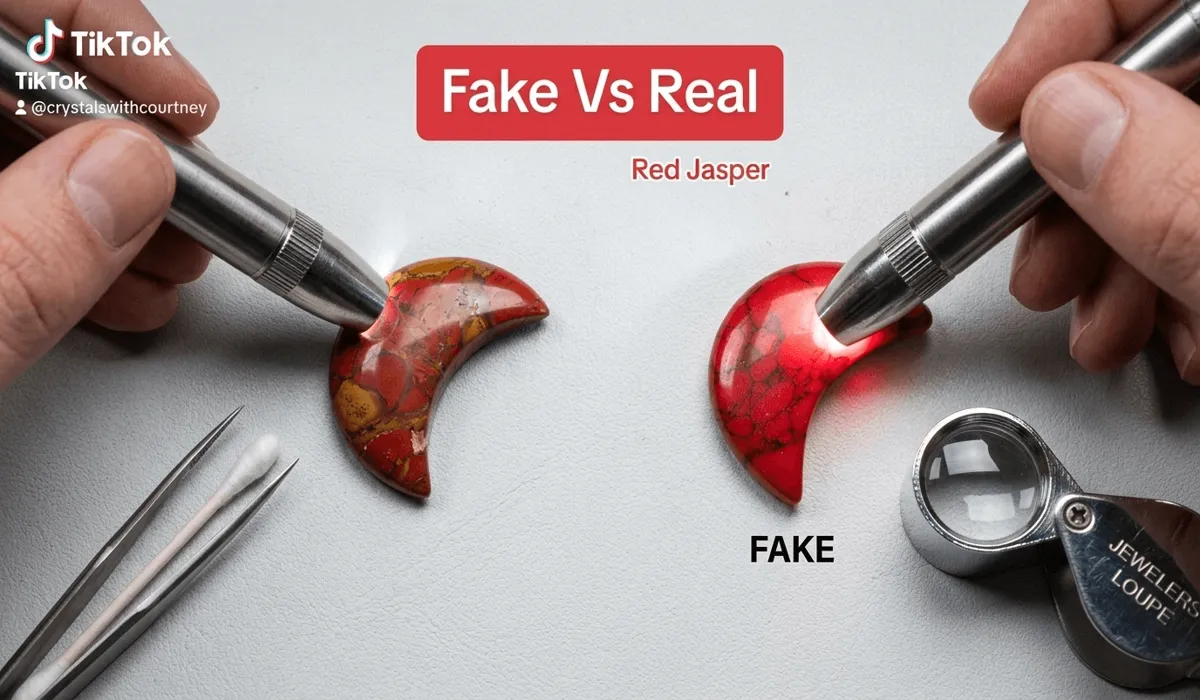
Natural Red Jasper vs Synthetic Glass and Resin Imitations
Glass and resin imitations are prevalent in cheap fashion stalls and mass-market online listings. Manufacturers add iron powders or red dyes to molten glass or liquid plastic, pouring them into bead molds. Fortunately, glass and plastic possess physical dead giveaways that you can spot within seconds.
Inspect the interior of the stone under bright overhead lighting. Glass beads frequently contain tiny, perfectly spherical trapped air bubbles, which never form inside natural chalcedony minerals. Furthermore, glass chips easily along bead holes, leaving razor-sharp, glassy flakes rather than the smooth, satiny curves of real jasper.
Conducting a quick thermal test is another reliable method for ruling out glass and plastic. Genuine red jasper has high thermal inertia; it feels cold against your cheek and takes several minutes to absorb body heat. Glass warms up quickly, and plastic feels warm and room-temperature the moment your fingertips make contact.
To see how dye pooling looks in real-world mineral tests, watch this helpful gem demonstration below:
Video source: YouTube
Author: Mooney Fine Mineral
Original video link: https://www.youtube.com/watch?v=WADH1MGbd1U
Finally, you can perform a safe solvent test using regular household acetone or nail polish remover. Dip a clean white cotton swab into pure acetone and gently rub an inconspicuous corner or bead drill hole for thirty seconds. If the cotton swab picks up red or pink stains, the stone is chemically dyed, as natural jasper will never bleed color.
| Diagnostic Feature | Real Red Jasper | Dyed Howlite | Dyed Agate | Red Glass Fake |
|---|---|---|---|---|
| Mohs Hardness | 6.5 to 7.0 (Very Tough) | 3.5 (Very Soft) | 6.5 to 7.0 (Hard) | 5.5 (Moderate) |
| Light Opacity | 100% Fully Opaque | Opaque with white core | Translucent / Glowing | Translucent to Transparent |
| Surface Luster | Waxy to Satiny | Dull, Chalky, or Coated | Vitreous (Glassy) | High Glassy Mirror Polish |
| Internal Inclusions | Iron veining, dendrites | Porous web lines | Concentric growth bands | Trapped round air bubbles |
| Acetone Swab Test | No color transfer (Clean) | Swab turns bright pink/red | May bleed if surface-dyed | No transfer (Color inside) |
Who Is Red Jasper Most Suitable For?
Because red jasper carries a gentle, grounding resonance, it suits a wide variety of wearers and crystal enthusiasts. It does not bombard your field with erratic, intense energy. Instead, it offers a sturdy foundation upon which you can build calm daily habits.
Chakra or Energy Alignment
This mineral is particularly helpful for people who feel chronically ungrounded, flighty, or stuck inside their own heads. If you spend entire workdays daydreaming, overanalyzing conversations, or struggling to complete basic chores, red jasper helps bring you back into your physical body. It anchors your awareness firmly on the earth beneath your feet.
Energy workers often recommend red jasper to clients before they experiment with high-frequency crown chakra stones like moldavite or phenakite. Trying to expand higher awareness without a solid root foundation can leave individuals feeling emotionally fragile and disoriented. Red jasper establishes that essential, stable base first.
It also supports those who feel physically exhausted from chronic stress or continuous caregiving. The stone serves as an energetic anchor, reminding wearers to conserve their physical stamina and prioritize bodily rest. It encourages you to recharge your energy reserves through wholesome meals, restful sleep, and quiet solitude.
Zodiac and Astrological Associations
Astrologically, red jasper shares a natural affinity with the fiery, impulsive energy of Aries. Aries individuals are celebrated for their bold initiative, but they sometimes burn out quickly or react with sudden impatience. Red jasper tempers that blazing fire with stable earth energy, helping Aries finish what they start.
Scorpio placements also benefit immensely from keeping genuine red jasper close at hand. Scorpios experience profound, stormy emotional depths and can occasionally become consumed by intense brooding. The stone’s grounding earth frequency absorbs emotional turbulence, offering clear, unclouded perspective during periods of personal transformation.
Furthermore, traditional earth signs—Taurus, Virgo, and Capricorn—feel an instant kinship with natural jasper. Its organic, dense structure resonates harmoniously with their pragmatic, reliable outlook on life. Independent mineral enthusiasts can reference Gemmological Association Mineralogy Research to study how these silicate formations occur across various continental terrains.
Lifestyle and Daily Environment
Red jasper is an exceptional companion stone for people working in loud, chaotic, or stressful work environments. Hospital nurses, school teachers, construction managers, and emergency responders all benefit from its calming presence. It acts as an energetic shock absorber against collective workplace anxiety.
Athletes, gym lovers, and physical laborers will also appreciate jasper’s long symbolic connection to endurance. Wearing an authentic red jasper bracelet during training reminds you to maintain proper form, breathe steadily, and honor physical recovery. It celebrates physical strength that is built slowly through honest, persistent effort.
Finally, this stone is a must-have for ethical mineral collectors who value genuine geological purity over mass-produced flash. Holding a stone that was formed by volcanic heat and underground water millions of years ago is humbling. True red jasper connects you directly to the timeless story of our planet.
How to Cleanse, Charge, and Care for Natural Red Jasper
Proper physical and intentional maintenance keeps your natural red jasper stones looking radiant and performing at their best. Because jasper is a tough silicate mineral, caring for it is simple and straightforward. You do not need expensive laboratory equipment to keep your stones pristine.
Gentle Cleansing Methods
To physically clean your jasper, hold the stone under lukewarm running tap or natural spring water for thirty seconds. Use a soft cotton washcloth to gently wipe away accumulated body oils, sunscreen, or daily dust. Never use industrial steam cleaners, ultrasonic machines, or harsh chemical detergents, as these can dull the stone’s satiny polish.
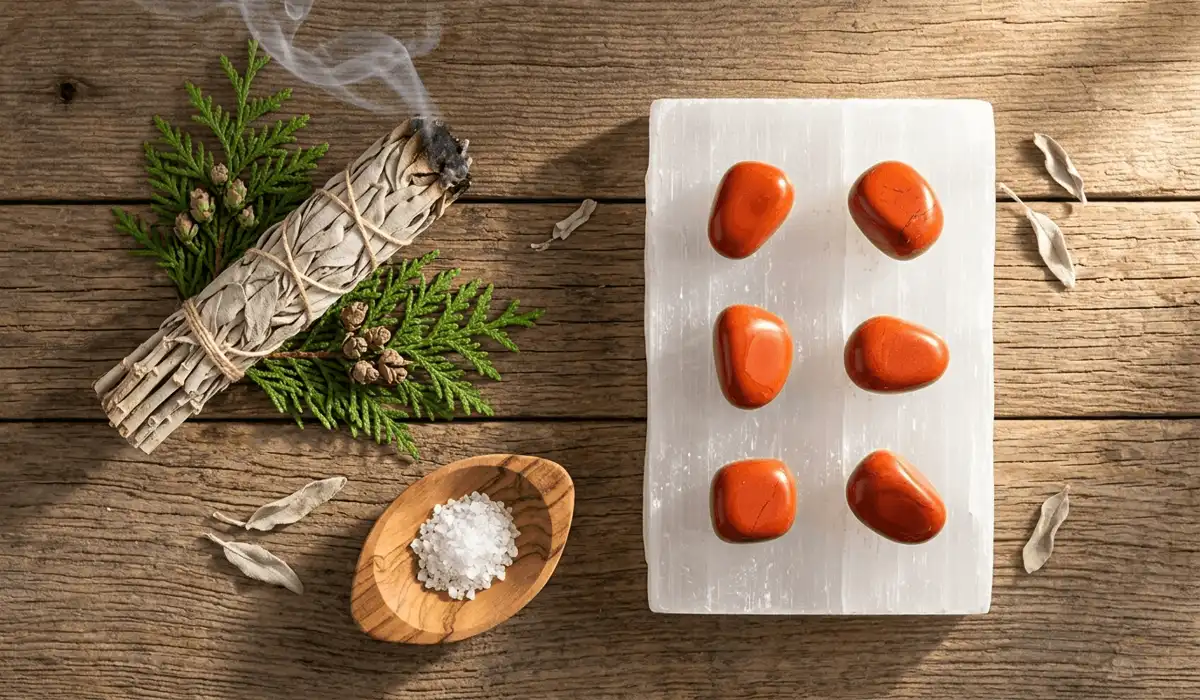
For energetic clearing, bathing your stones in herbal botanical smoke is one of the oldest and most effective practices. Pass your red jasper through the cool smoke of dried white sage, mountain cedar, or sweetgrass for a minute. The rising smoke symbolically carries away stagnant, heavy frequencies accumulated during demanding days.
Another wonderful non-contact clearing technique involves resting your jasper on a white selenite charging slab or inside a raw clear quartz geode. Selenite contains a bright, refreshing frequency that naturally purifies denser earth stones overnight without causing any physical abrasion.
Preparing and Charging Practices
Because red jasper contains abundant natural iron oxides, it responds beautifully to the gentle warmth of the morning sun. Place your stone on an outdoor patio table or sunny windowsill for twenty to thirty minutes just after dawn. The gentle morning light invigorates the mineral without causing the thermal shock that can occur under scorching midday heat.
You can also charge red jasper by connecting it directly to natural soil. Wrap the stone in a breathable cotton handkerchief and bury it a few inches deep in garden dirt or inside a healthy potted houseplant. Leaving it in the soil for twelve to twenty-four hours returns the mineral to its native earth environment for deep revitalization.
Full moon nights provide another serene opportunity to recharge your personal intentions. Place your jasper jewelry outdoors or near a windowpane bathed in silver moonlight. The calm, reflective light of the moon balances the bold, earthy red tones of the stone, infusing your practice with quiet grace.
Daily Care and Long-Term Storage Guidelines
Always remove your red jasper bracelets, rings, and pendants before entering chlorinated swimming pools, hot tubs, or ocean surf. Harsh pool chlorine and salt water can gradually degrade jewelry cords and erode soft metal accents. Put your jewelry on after applying perfumes, hairsprays, and body lotions to avoid chemical film buildup.
Store individual pieces of red jasper jewelry inside a soft velvet pouch or a separate fabric-lined compartment in your jewelry box. Even though jasper is durable, harder stones like diamonds, sapphires, and topazes can scratch its polished surface if stored together loosely. Keeping stones separated ensures their satiny finish remains unblemished for decades.
When stringing or wearing beaded jasper bracelets, avoid yanking or overstretching the elastic cord. Roll the beads gently over your hand onto your wrist rather than pulling the strand wide. Taking mindful care of your jewelry honors the earth materials you wear and extends the lifetime of your favorite pieces.
“Natural stones carry the patient memory of ancient mountains and subterranean rivers. When we choose unenhanced minerals, we honor the genuine rhythms of the earth.”
Frequently Asked Questions
Q: How can I tell if red jasper is real or fake?
A: You can tell if red jasper is real by checking its opacity with a bright flashlight, as genuine jasper blocks light completely. Inspect the stone for natural brick-red tones and dark mineral veins rather than bright neon coloring. In addition, real jasper resists steel nail scratches and leaves no dye residue when rubbed with an acetone swab.
Q: Is red jasper completely opaque?
A: Yes, genuine natural red jasper is completely 100% opaque due to its dense microcrystalline quartz structure filled with natural iron inclusions. Even along thin polished bead edges, no light will shine or glow through the body of the stone. If your stone glows or lets shadows show through under a flashlight, it is dyed agate, carnelian, or colored glass.
Q: What wrist do you wear red jasper on?
A: You should wear red jasper on your left wrist when you want to absorb grounded stability, emotional calm, and quiet patience internally. Wear it on your right wrist when you need to project steady energy, strong personal boundaries, and physical stamina outward during work or social challenges. You can easily switch wrists based on your personal needs each morning.
Q: How do you cleanse red jasper?
A: Cleanse red jasper by rinsing it briefly under lukewarm running tap water and drying it thoroughly with a soft microfiber cloth. You can also clear its subtle energy by waving it through botanical sage smoke or resting it on a white selenite slab overnight. Avoid harsh chemicals, bleach, and ultrasonic machines that might damage the surface polish.
Q: Who should not wear red jasper?
A: People who already feel heavy, lethargic, or unmotivated may find red jasper’s dense, slow earth energy too grounding for their current state. Furthermore, individuals experiencing stubborn emotional rigidity or an extreme resistance to change may prefer lighter, air-element stones like citrine or blue lace agate. Always listen to your body and choose stones that help you regain personal equilibrium.
Conclusion: Honoring Natural Earth Stones in Your Journey
Identifying authentic red jasper is an enjoyable and rewarding skill for any mindful gemstone enthusiast. By remembering that true jasper is completely opaque, tough on the Mohs scale, and earthy in color, you can easily avoid dyed howlite and synthetic glass fakes. Embracing genuine geological specimens ensures that your personal collection remains deeply rooted in authentic earth history.
A Mindful Step Forward:
Take a few minutes today to inspect your favorite red stones using the penlight, tactile warmth, and visual veining tests we shared above. Honoring the authentic, unhurried nature of genuine earth minerals brings deeper presence and intentional grounding to your daily life.
This content is provided for informational and cultural exchange purposes only. It does not constitute medical, legal, financial, or other professional advice. Readers should consult qualified professionals whenever necessary.

Written by the Buddha Bodhis Team
Since 2020, we have been devoted to exploring traditional year-based wisdom, classical Feng Shui principles, and the rich spiritual symbolism rooted in Eastern cultural heritage. Our work bridges ancient metaphysical systems with modern life, interpreting annual cycles, elemental energies, and symbolic meanings to offer thoughtful insight and practical guidance. Through continuous research and practice, we aim to preserve traditional knowledge while making it accessible, relevant, and meaningful for contemporary seekers of balance, intention, and personal growth.
TikTok | YouTube | Pinterest | X
buddhabodhis@gmail.com